
One mind · Multiple artists · A life in music
The 1st Drop Music Experiment - Meet Bear Cole and His Expanding Inner Universe of Artists
A musical ecosystem that began with two names in 2005 and grew into ten complete artist identities—each born from the sound it needed to become.
Enter the experiment ↓The 1st Drop Music Experiment
One Mind. Multiple Artists. A Life of Music Becomes an Ecosystem.
What began with two artist names in 2005 became an experiment in how many honest musical worlds one person could create.
Today, 1st Drop Music is a record label, an archive, a creative laboratory, and an ecosystem of ten fully realized artists—all originating from the mind and musical soul of Bear Cole.
Bear is the songwriter, producer, vocalist, MC, DJ, musician, and creator behind the entire experiment.
The artists are connected, but they are not interchangeable. Each has a distinct sound, personality, history, visual language, and purpose. They emerged gradually as different parts of Bear’s music developed identities strong enough to stand on their own.
One creator. Ten artists. Twenty years of musical evolution.
This is the 1st Drop Music Experiment.
The 1st Drop Music Experiment
It Began With Two Artists
In 2005, there was Bear the Astronot and Turntable Kachina.
There was no elaborate plan to construct a musical universe. There were records to discover, instruments and equipment to learn, ideas to chase, songs to write, beats to build, and music that refused to remain inside a single genre.
Bear the Astronot became the voice at the center: an Arizona MC, songwriter, producer, and alternative Hip-Hop artist with an instinct for storytelling, experimentation, social consciousness, and questioning whatever the music industry considered normal.
Turntable Kachina gave another part of Bear’s creativity somewhere to live. That identity grew from DJ culture, turntablism, sampling, instrumental Hip-Hop, electronic rhythm, world music, and a fascination with records—not simply as a format, but as instruments and sources of possibility.
One project carried the words, personality, and stories. The other could follow the turntables, samples, rhythms, and production into places that did not require a traditional front person.
The separation was not a marketing exercise.
It was a creative solution.
Different music wanted different rooms.
The 1st Drop Music Experiment
The Problem With One Artist Name
Musicians are usually encouraged to simplify.
Choose a name. Choose a genre. Establish a recognizable sound. Build an audience around it. Repeat the parts people recognize.
That model never fully described the way Bear Cole heard or created music.
A lifelong relationship with DJ culture meant genres were never sealed containers. Hip-Hop led naturally into funk, soul, jazz, electronic music, rock, country, folk, pop, punk, industrial music, house, disco, ambient sound, bass music, cinematic composition, and combinations without convenient names.
Records did not arrive as isolated categories. They spoke to one another.
A drum break might suggest Hip-Hop. A synthesizer could pull the same idea toward electronic music. A distorted guitar might turn it into something darker and heavier. A melody could reveal itself as pop. A story might demand folk or country. A rhythm built for a dance floor could have nothing in common with a lyric written for quiet listening.
Trying to place all of those impulses under one artist name created its own limitation. The more varied the catalog became, the less clearly any single identity could communicate what it meant.
The answer was not to narrow the music.
The answer was to let it multiply.
The 1st Drop Music Experiment
The Music Created the Artists
The artist identities within 1st Drop Music were not invented first and handed musical assignments afterward.
The music came first.
As particular sounds, methods, ideas, and emotional worlds repeated, they began to develop their own gravity. Groups of songs started to feel related—not merely by genre, but by perspective. They shared an atmosphere, vocabulary, visual language, and reason for existing.
Eventually, a miscellaneous folder was no longer enough.
The music needed an artist.
Each identity became a container strong enough to let a specific creative direction grow without forcing it to explain or compromise itself for the rest of the catalog.
Bear the Astronot could remain Bear the Astronot.
Turntable Kachina could follow the records, samples, and rhythm.
Other sounds could continue developing until they revealed names and personalities of their own.
The artists were not created to make the catalog appear larger. They emerged because the catalog had already become too creatively expansive to belong to one voice.
If you listen through the music chronologically—from 2005 to the present—you can hear this happening. The later artists do not appear from nowhere. Their beginnings are hidden inside earlier songs, albums, experiments, production choices, and genre collisions.
The identities are born gradually in the music. Then, when their worlds become clear enough, they step forward on their own.
The 1st Drop Music Experiment
Ten Artists. One Creative Source.
The full 1st Drop Music ecosystem consists of ten artists:
- Bear Cole
- Bear the Astronot
- Turntable Kachina
- Feral Business
- Indrid Coald
- Michael Patrick Ceol
- Oso Melodic
- RACK WIDOW
- Sagebrush & The Little Flowers
- WUUYUH
Bear Cole is the songwriter, producer, vocalist, MC, DJ, musician, and creative force behind every one of them.
Each artist expresses a different part of his musical life. Each has its own origin story and a particular place within the larger ecosystem. Some grew directly from sounds that first appeared in earlier projects. Others emerged when a production approach, writing voice, or emotional atmosphere became too distinct to remain a side road inside another artist’s catalog.
These are not ten costumes placed over the same music.
They are ten musical personalities developed from one unusually eclectic creative life.
The shared authorship is part of what makes the ecosystem authentic. The distinctions between the artists are what make it interesting.
The guiding principle is:
Preserve the artists. Reveal the connection.
On their individual sites, the artists are given space to exist as complete worlds. Here, the curtain opens wider. This is where listeners can see the creator behind them, understand how the projects relate, and follow the musical ideas as they move from one identity into another.
The 1st Drop Music Experiment
A Small Universe of Musical Personalities
Every 1st Drop Music artist begins with a different creative question.
What happens when conscious alternative Hip-Hop becomes darker, heavier, more electronic, and increasingly confrontational?
What happens when country, folk, singer-songwriter traditions, pop melody, Hip-Hop, and the atmosphere of Arizona begin speaking to one another?
What happens when world music, sample culture, turntablism, disco, dance music, and electronic production keep evolving through the hands of the same DJ?
What happens when distorted guitars, ominous synthesizers, rhythm, noise, character, humor, melody, and storytelling are allowed to separate and recombine without asking whether they belong under the same genre heading?
The multiple identities provide clarity.
They allow a body of work to develop beyond one track or experiment. Artwork, language, performance, production, history, and personality can reinforce one another. Listeners are invited into a coherent world rather than confronted with an unexplained genre change inside an unrelated catalog.
The identities share one creator, but they do not have to share one personality.
They are different ways of listening, writing, performing, producing, remembering, questioning, and communicating.
The 1st Drop Music Experiment
Follow the Hidden Musical Paths
For listeners willing to explore beyond individual songs, another story begins to emerge.
The catalog contains hidden paths between the artists.
You can hear ideas forming before they have names. A sound enters one project quietly, develops across several releases, and eventually becomes the foundation of another artist.
These connections are not rules or perfectly straight lines. Music rarely evolves that neatly. They are recurring musical instincts—creative threads that Bear continued following until they became worlds of their own.
From Alternative Hip-Hop to Southwest Soul
The beginnings of Southwest Soul can be heard inside Bear the Astronot’s music.
As his alternative Hip-Hop expanded, elements of country, folk, and singer-songwriter music began entering the work. These were not abrupt experiments pasted onto Hip-Hop. They grew from an increasing interest in narrative songwriting, melody, place, memory, and the emotional weight a song could carry beyond its beat.
Those instincts continued into Bear Cole’s albums, including *Alabaster* and *Love in the Time of A.I.*, where the writing opened further into a pop songwriting aesthetic. Melody, structure, vulnerability, and storytelling became more visible without abandoning the genre-crossing foundation underneath them.
That thread eventually found a distinctly Arizona home in Sagebrush & The Little Flowers.
There, the songwriting becomes subtler. Country and folk atmosphere move to the foreground. The music carries the space, contradictions, memory, and emotional landscape of the Southwest without reducing Arizona to scenery or costume.
Listeners who trace the path backward may hear Sagebrush & The Little Flowers beginning years earlier, quietly forming inside Bear the Astronot and Bear Cole songs before the artist had a name.
From Rap-Rock Experiments to Feral Business
Some of Bear the Astronot’s early music pushed Hip-Hop into rock and alternative territory.
Distorted guitars, live-band energy, aggressive arrangements, punk instincts, and the friction between rapping and rock production began opening another path through the catalog.
Those experiments did not disappear.
They expanded into Feral Business.
What began as a collision inside alternative Hip-Hop was eventually given enough room to become its own identity—louder, sharper, and capable of following the rock-oriented side of Bear’s writing without asking Bear the Astronot to become a different artist.
Feral Business is not disconnected from the early catalog. It is one of the places that catalog was trying to go.
From Conscious Hip-Hop Into Darker Electronic Worlds
Bear the Astronot’s conscious Hip-Hop roots also moved in another direction.
The alternative and experimental sides of the project began absorbing darker electronic sounds, distorted guitars, ominous synthesizers, heavier rhythms, and increasingly shadowed forms of rap.
Those ideas connect to the strange, dark musical world of Michael Patrick Ceol. They also help give birth to projects such as Indrid Coald, where electronic production, dark rap, character, atmosphere, and unease can exist without being softened to fit the expectations of another artist.
Again, the transformation is not a clean handoff.
It is an evolution.
The early work contains fragments. Later projects collect those fragments, give them context, and allow them to become complete identities.
From Turntable Kachina to the Dance Floor—and Beyond
Turntable Kachina began with Hip-Hop beats, world music, sampling, turntablism, and dance music.
Because Bear approached production through the ears of a DJ, rhythm was never confined to one scene. A record could be a source for a beat, an entry into another culture, a bridge between genres, or the beginning of a completely different production language.
That rhythmic curiosity expanded in several directions.
It moved toward the dance floor through the Nu-Disco productions of Bear Cole.
It traveled into different and less organic electronic realms through WUUYUH and RACK WIDOW.
It continued deeper into instrumental production and beat culture through Oso Melodic, where chopped records, dusty drums, detuned synthesizers, and tactile studio experimentation could become a world of their own.
Turntable Kachina remains a distinct artist, but its early curiosity helped establish pathways that continue throughout the ecosystem.
A listener can begin with the records and turntables, follow the rhythm into disco and electronic music, move through darker synthetic worlds, and arrive at the intimate craft of instrumental beatmaking.
Different artists. Different destinations. One evolving musical instinct.
The 1st Drop Music Experiment
The Catalog Is the Map
The best way to understand the experiment is not simply to read about it.
Listen chronologically.
Begin in 2005. Move through the early Bear the Astronot and Turntable Kachina recordings. Follow the changes in writing, production, instrumentation, rhythm, atmosphere, and subject matter.
Listen for the moments when a familiar project begins reaching toward something it cannot yet name.
You may hear country and folk entering Hip-Hop before Southwest Soul finds its home.
You may hear pop songwriting becoming more important before Bear Cole’s albums bring it forward.
You may hear Feral Business forming inside alternative rap and rock collisions.
You may hear Indrid Coald somewhere inside the darkening electronic edges of Bear the Astronot.
You may hear Oso Melodic waiting inside the records, beats, and production experiments of Turntable Kachina.
You may hear WUUYUH and RACK WIDOW emerging as electronic music moves farther away from organic sources and into different imagined spaces.
The catalog documents the birth of the artists.
They do not replace the projects that came before them. They provide another way to understand where those projects were leading.
The 1st Drop Music Experiment
The Wax Chumps: A Hidden Room
Careful listeners may also discover The Wax Chumps.
The Wax Chumps were a small, short-lived Hip-Hop collaboration between MC Bear the Astronot and producer Waxie. The project is not one of the ten full artists in the current 1st Drop Music ecosystem. It is not actively creating new music, and its recordings are not available through distributors or major streaming platforms.
But it remains part of the history.
Rather than erase the project because it was brief, 1st Drop Music preserves it on the site as a small easter egg for listeners who enjoy looking deeper.
It is a hidden room in the archive: evidence of a particular collaboration, time, and creative relationship that helped form the larger story.
Not every meaningful project must become permanent or expansive. Some exist for a moment, leave behind a few recordings, and become part of the mythology listeners discover later.
The Wax Chumps live on for the people who find them.
The 1st Drop Music Experiment
Eclecticism Became the Engine
For many artists, eclectic taste is treated like a problem that needs to be corrected.
For 1st Drop Music, it became the engine of the entire project.
Bear Cole’s life in music has never been limited to one role. Songwriter, producer, vocalist, MC, DJ, turntablist, musician, collector, designer, archivist, and lifelong listener are all parts of the same creative practice.
DJing was especially important to the way the ecosystem developed.
A DJ learns to hear relationships across recordings separated by genre, decade, geography, scene, technology, and marketing category. The craft depends on recognizing how one sound can speak to another.
That habit followed Bear into songwriting and production.
Genres remained useful descriptions, but they became poor borders.
Hip-Hop could meet country. Folk could lead into pop. Rock could become electronic. Conscious rap could become dark and distorted. World music and turntablism could find their way to disco, beat culture, or unfamiliar synthetic spaces.
As the range widened, the artist identities made that breadth understandable.
1st Drop Music did not expand because a business plan demanded more acts.
It expanded because the music kept becoming more specific.
The 1st Drop Music Experiment
Arizona Is More Than the Background
The 1st Drop Music experiment grew in Arizona, and that place has shaped it.
Arizona is desert and mountain, heat and snow, distance and development, ancient landscape and constant reinvention. It is borderland, city, reservation, highway, small town, college community, tourist mythology, working reality, and home.
Those contrasts appear throughout the music—not always literally and never under one required sound.
For some projects, Arizona is part of the story, imagery, memory, or emotional temperature. For others, it is simply the place where the work was lived and made.
The goal is not to place a Southwestern costume over every release.
Place should be felt honestly.
“Experience Southwest Soul” became one invitation into this world: a way of describing music shaped by place, emotion, creative freedom, and the contrasts of the American Southwest.
Southwest Soul is not a generic label applied to everything 1st Drop Music releases. It is one meaningful path through a much larger ecosystem—and one whose origins can be heard developing across the catalog long before it received a name.
The 1st Drop Music Experiment
The Label Became an Archive
Twenty years of music creates more than a catalog.
It creates evidence of becoming.
Early recordings preserve the limitations, instincts, ambitions, experiments, and discoveries of the person who made them. Later work does not erase those records. It answers them, contradicts them, improves upon them, or reveals ideas that were present before anyone understood where they were leading.
1st Drop Music gradually became responsible for more than releasing whatever was newest.
It became responsible for remembering.
Recordings, alternate versions, lyrics, artwork, videos, photographs, physical releases, unfinished ideas, credits, stories, collaborations, and relationships became parts of a larger creative history.
Some were easy to find. Others had to be recovered, identified, repaired, reorganized, or understood again.
The archive is not a museum where nothing can move.
It is active material.
An old song can be rediscovered. An unfinished project can become legible years later. An early recording can gain new meaning through the artist identity that eventually grew from it. A forgotten thread can lead to a new release or reveal that an apparently new idea has been developing for years.
The past remains present without being allowed to imprison the future.
The 1st Drop Music Experiment
Building the Infrastructure the Music Needed
As the catalog expanded, ordinary artist websites and disconnected streaming profiles were no longer enough.
The music needed a system capable of understanding that a person and an artist are related concepts, but not identical ones.
It needed to recognize that one creator could be responsible for multiple artists without collapsing them into one generic profile.
It needed to understand releases, recordings, credits, lyrics, videos, merchandise, playlists, articles, artwork, press materials, DJ files, and the relationships among them.
That need led to Mission HQ: the operational center of the 1st Drop Music ecosystem.
Mission HQ preserves the information behind the work and publishes it outward to the appropriate artist sites and experiences. Each artist can have a distinct visual identity, catalog, history, and public presence while remaining connected to the larger label.
A release can bring together its music, story, lyrics, videos, merchandise, playlists, press kit, DJ bundle, artwork, and related material as one complete experience.
The technology is not the main character.
Its purpose is to stop technology from flattening the music.
Instead of forcing every artist into the same template, the system is designed to preserve what makes each project distinct while revealing the relationships that make the larger experiment meaningful.
The 1st Drop Music Experiment
More Than a Record Label
Calling 1st Drop Music a record label is accurate, but incomplete.
It releases music. It develops artists. It maintains catalogs. It creates artwork, videos, merchandise, stories, playlists, websites, and physical objects. It helps music reach listeners.
But the deeper experiment is about whether all of those things can remain connected without becoming identical.
Can one creative life produce ten authentic artist identities?
Can each receive the care normally reserved for a completely separate act?
Can a label preserve its history without becoming trapped by nostalgia?
Can technology provide context without reducing art to data?
Can commerce support the music without becoming its reason for existing?
Can a catalog move through radically different genres and still feel connected by authorship, values, place, curiosity, and creative purpose?
Can listeners enter through one artist and gradually discover a tiny universe hiding behind it?
Those questions remain alive.
That is why this is still an experiment.
The 1st Drop Music Experiment
Music First
The principle beneath everything is simple:
The music comes first.
The artist identities, websites, stories, artwork, playlists, products, technology, and label structure exist to help people encounter the music more meaningfully.
They should provide doors, not distractions.
A listener may enter through a Bear the Astronot song, a Turntable Kachina beat, a Bear Cole album, an Oso Melodic instrumental, a Sagebrush & The Little Flowers story, a Feral Business guitar, an Indrid Coald character, a Michael Patrick Ceol sound, a WUUYUH rhythm, a RACK WIDOW production, a playlist, a video, a shirt, a DJ set, or an old recording found somewhere unexpected.
No entrance is required to explain the entire building.
But every path can lead deeper.
Discovery is not treated as a funnel.
It is exploration.
The 1st Drop Music Experiment
Meet the Creator: Bear Cole
At the center of the experiment is Bear Cole.
Bear is the songwriter, producer, vocalist, MC, DJ, musician, and creator behind all ten artists in the 1st Drop Music ecosystem.
He is not a distant label executive standing above a roster of unrelated acts. He is the person working through every corner of the catalog—writing, recording, producing, performing, listening, experimenting, organizing, revisiting, and continuing to discover what each project can become.
The Bear Cole name provides a way to meet the person behind the entire body of work without erasing the artists that emerged from it.
That balance matters.
The connection should be clear. The individual identities should remain intact.
Bear the Astronot is not merely a category inside Bear Cole. Oso Melodic is not a folder of leftover instrumentals. Sagebrush & The Little Flowers is not a temporary country experiment. Feral Business, Indrid Coald, Michael Patrick Ceol, RACK WIDOW, Turntable Kachina, and WUUYUH are not arbitrary branding exercises.
Each artist exists because a particular part of Bear’s musical imagination needed enough room to become itself.
Bear Cole is the thread.
The artists are the worlds built along it.
Together, they form a tiny universe of musical personalities—one of the most unusual ways Bear could find to express the lifelong drive to write, create, perform, produce, and share original music.
The 1st Drop Music Experiment
One Mind. Multiple Artists.
The 1st Drop Music Experiment is what happened when an eclectic musical life was not forced into one box.
Two artists became a label.
The label became a catalog.
The catalog became an archive.
The archive revealed a network of distinct creative identities.
Those identities became an ecosystem.
Listen from 2005 to today and you can hear that ecosystem being born. Musical ideas appear, disappear, change form, and return inside new projects. Genres collide. Voices separate. Personalities emerge. What once sounded like an unusual turn inside one artist’s catalog becomes the beginning of another artist’s story.
There is one mind behind these connected worlds.
There are ten artists because the music asked for them.
There is a lifetime of listening inside the work.
And the experiment is still becoming.
The 1st Drop Music Experiment
Enter the Experiment
Meet the creator. Explore the artists. Follow the sounds through the catalog. Look for the hidden rooms.
Start anywhere.
The 1st Drop Music Experiment** **One mind. Ten artists. A life of music, still becoming.
The complete ecosystem
Meet the ten artists.
Each box is a doorway into a distinct catalog, story, and creative world inside 1st Drop Music.
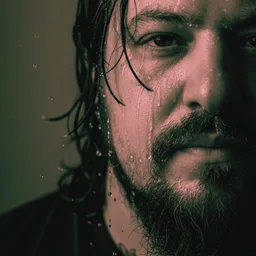 01 · 1st Drop artistBear ColeSongwriter · Producer · Vocalist · DJMeet the artist ↗
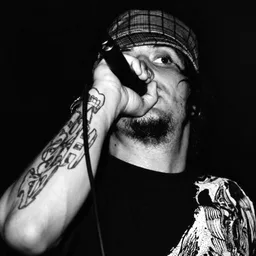 02 · 1st Drop artistBear the AstronotAlternative Hip-Hop · Southwest SoulMeet the artist ↗
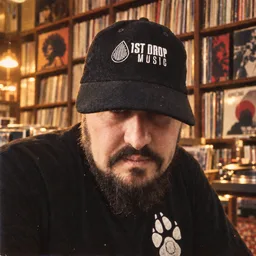 03 · 1st Drop artistTurntable KachinaWorld Beats · Hip-Hop · DanceMeet the artist ↗
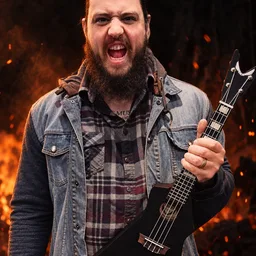 04 · 1st Drop artistFeral BusinessAlternative · Rock · ElectronicMeet the artist ↗
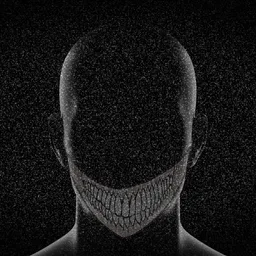 05 · 1st Drop artistIndrid CoaldDark Rap · Electronic · Visual WorldsMeet the artist ↗
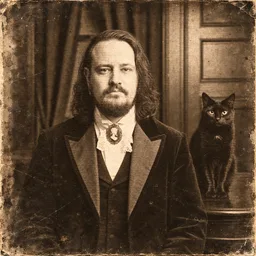 06 · 1st Drop artistMichael Patrick CeolDistorted Guitars · Evil SynthsMeet the artist ↗
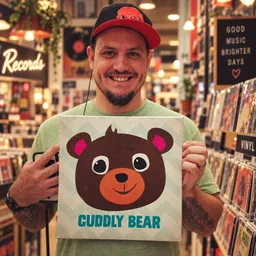 07 · 1st Drop artistOso MelodicBeat Culture · Instrumental WorldsMeet the artist ↗
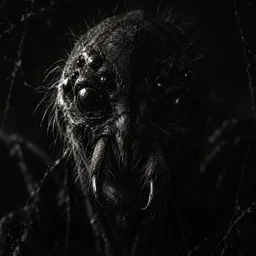 08 · 1st Drop artistRACK WIDOWDark Wave · ElectronicMeet the artist ↗
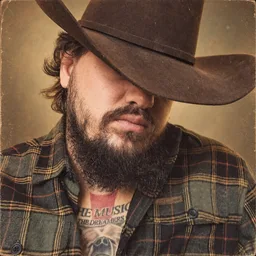 09 · 1st Drop artistSagebrush & The Little FlowersCountry · Folk · SongwritingMeet the artist ↗
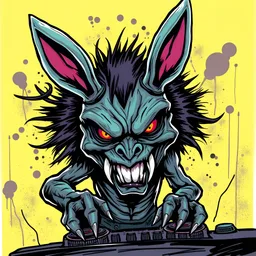 10 · 1st Drop artistWUUYUHExperimental · Electronic · AlternativeMeet the artist ↗